The wedge tomb at Carrownedan was once one of the later prehistoric burial monuments of the Mullinabreena–Achonry landscape. Though no longer standing, it remains an important recorded site, both because of its archaeological character and because its destruction illustrates the vulnerability of ancient monuments in the modern farming landscape.
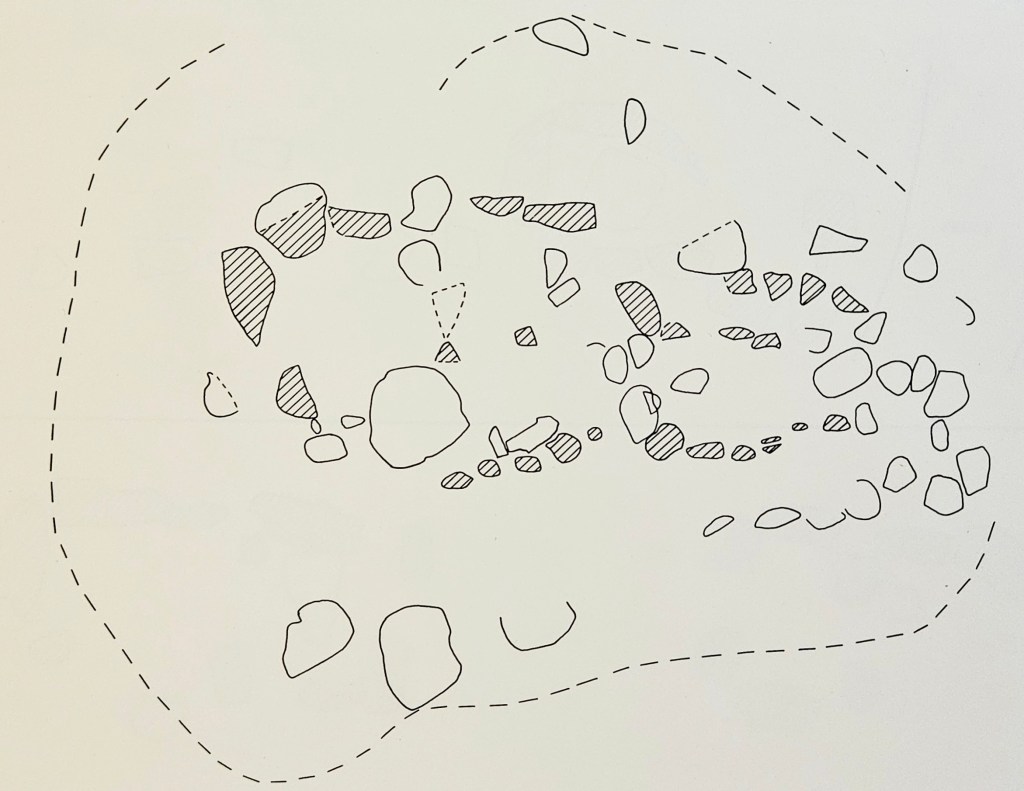
Figure 1: Plan of the Carrownedan wedge tomb (after Ó Nualláin 1989), showing the narrow gallery opening to the southwest, defined by orthostats and surrounded by the remains of an enclosing cairn.
The monument stood in rolling pasture, with the Ox Mountains dominating the landscape to the north. In 1951, before its destruction, the tomb could still be distinguished despite heavy vegetation. It was described as having a gallery opening onto a flat façade at the southwest, enclosed by an outer wall. These are typical features of Irish wedge tombs, which generally belong to the final phase of the megalithic tradition, at the end of the Neolithic and beginning of the Bronze Age.
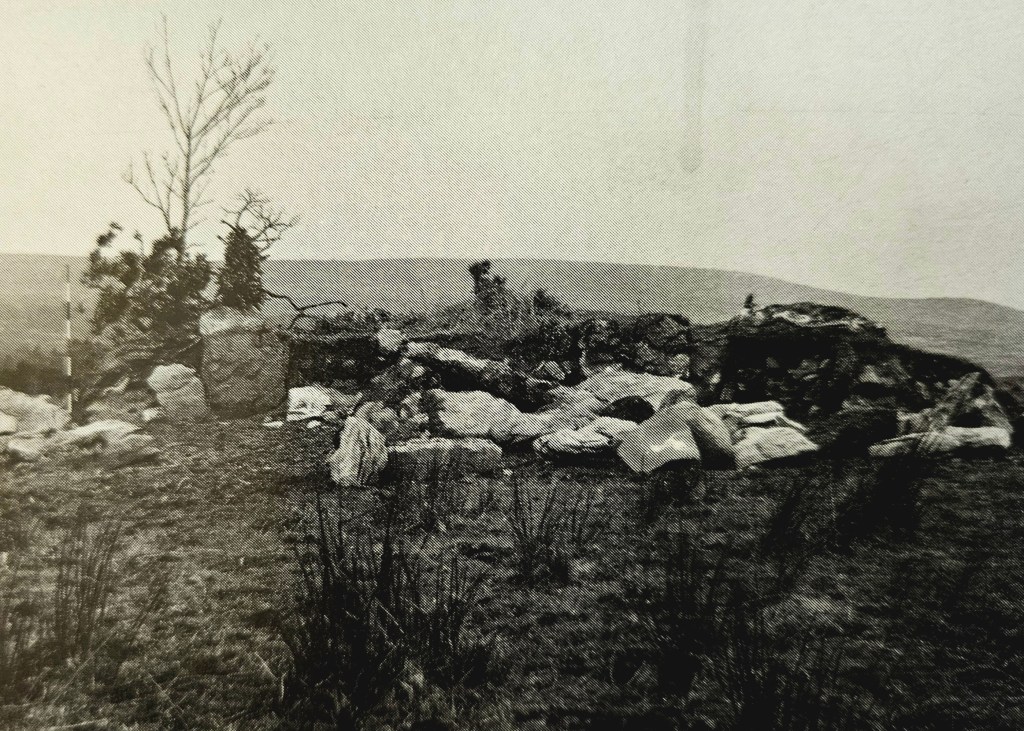
Figure 2: Carrownedan wedge tomb (SL025-081) during demolition in 1959, viewed from the south, showing displaced orthostats and collapsed cairn material (after Ó Nualláin 1989).
During the course of the tomb’s destruction in 1959, further examination indicated the presence of a portico, or entrance area. A quantity of unburnt human bone was also recovered at this time and was deposited in the National Museum of Ireland. This confirms the monument’s funerary function and marks Carrownedan as a true burial site rather than merely a stone structure or landscape feature.
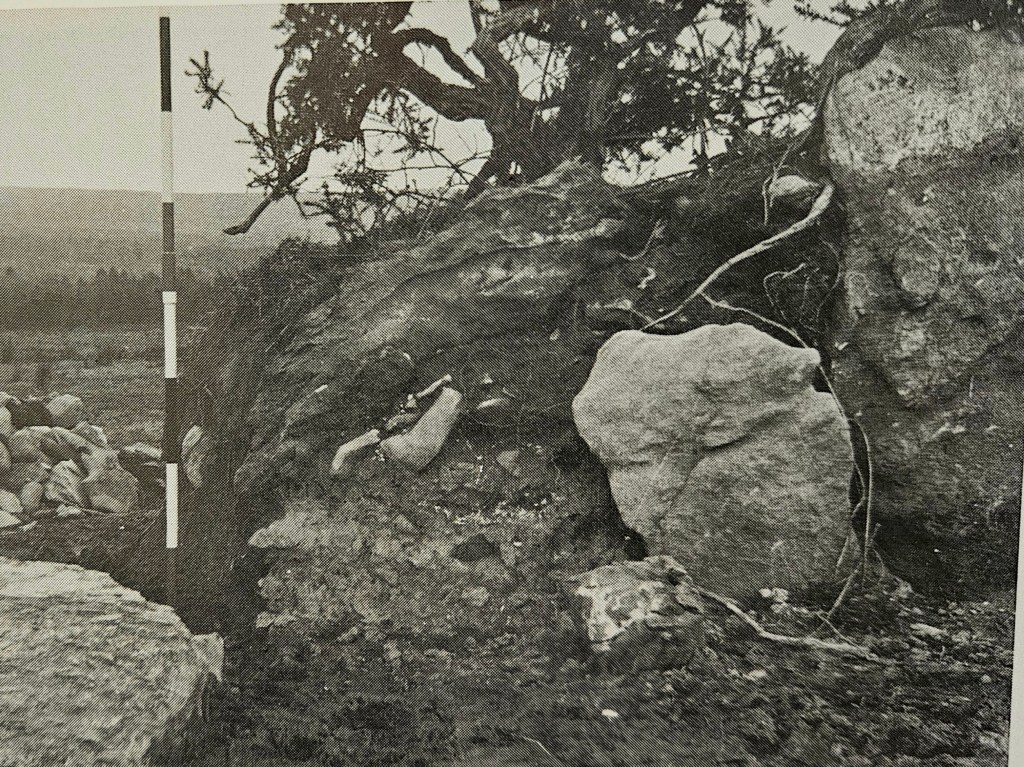
Figure 3: The portico area of the Carrownedan wedge tomb (SL025-081) during demolition, viewed from the south, showing entrance stones and disturbed cairn material (after Ó Nualláin 1989).
Wedge tombs differ from the earlier court tombs and passage tombs of the Neolithic. They are usually smaller, lower, and more modest in construction, often with a gallery that narrows or lowers toward the rear. Their entrances commonly face toward the west or southwest, as was the case at Carrownedan. This southwest orientation is one of the features that helps identify the monument as part of the wider wedge tomb tradition in Ireland.
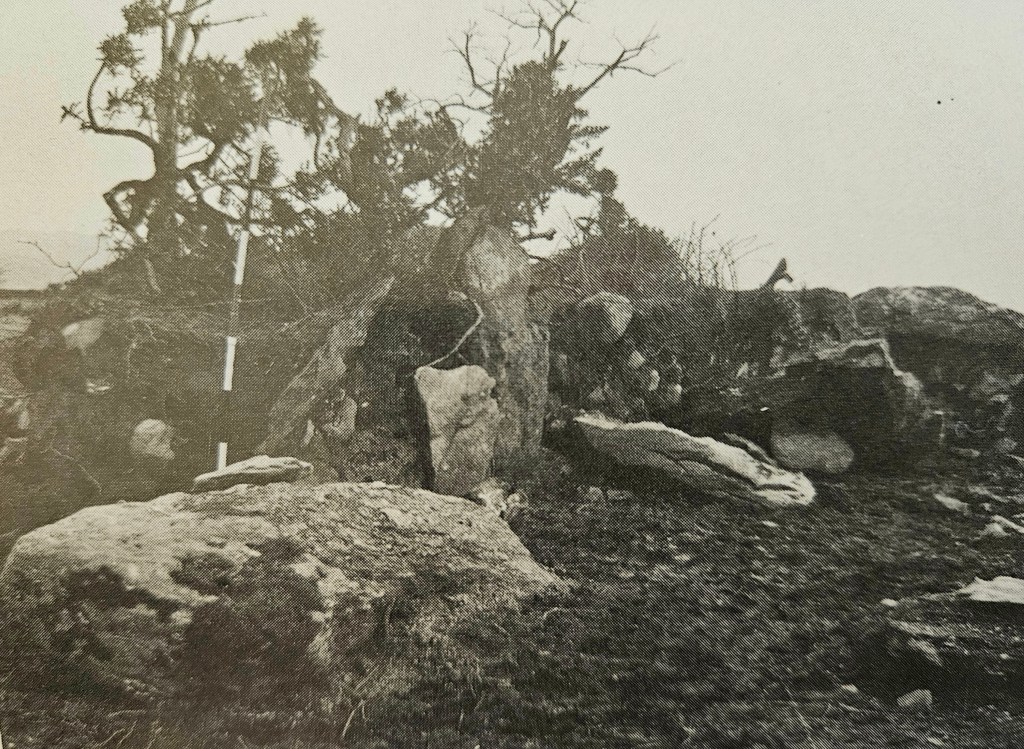
Figure 4: Carrownedan wedge tomb (SL025-081) during demolition, viewed from the west, showing a large capstone and supporting stones within disturbed cairn material (after Ó Nualláin 1989).
Chronologically, Carrownedan occupies an important transitional position. It does not belong to the earliest phase of Neolithic monument-building represented by court tombs such as those at Cloonaraher and Cloondrihara, nor to the passage tomb tradition represented by the cairns on Knocknashee. Instead, it belongs to the closing phase of megalithic burial practice, when older traditions of stone-built tombs continued into a changing world marked by the emergence of metalworking and new Bronze Age burial customs.
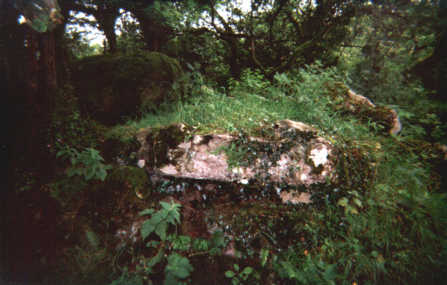
Figure 5: Surviving stones at the former site of the Carrownedan wedge tomb (SL025-081), showing remnants of the monument partially obscured by later vegetation growth.
Although the tomb itself has been removed, its record remains significant. It shows that the landscape around Mullinabreena and Achonry retained ritual importance long after the construction of the earlier Neolithic monuments. The presence of a wedge tomb at Carrownedan suggests continuity of burial and ceremonial activity into the third millennium BC.
The loss of the monument in 1959 is also an important part of its story. Many such sites were damaged or removed during earlier periods of land improvement, often before their significance was widely understood. Carrownedan therefore serves as both an archaeological site and a reminder of the importance of recognising and protecting what survives.
RMP/SMR Code: SL025-081—-
Townland: Carrownedan, County Sligo
ITM Coordinates: 554293, 821260
Latitude/Longitude: 54.138326, -8.699462
Monument Type: Megalithic Wedge Tomb
Period: Late Neolithic / Early Bronze Age, c. 2500–2000 BC
Status: Destroyed in 1959
References
Ó Nualláin, Seán. Survey of the Megalithic Tombs of Ireland. Volume V: County Sligo. Dublin: Stationery Office, 1989, 57–58, no. 91.
Egan, Ursula, Elizabeth Byrne, Mary Sleeman, Sheila Ronan and Connie Murphy. Archaeological Inventory of County Sligo. Dublin: Stationery Office, 2005.
National Monuments Service, Historic Environment Viewer, entry SL025-081—-, “Megalithic tomb — wedge tomb: Carrownedan.”

 Mullinabreena
Leave a comment