The townland of Carniara takes its name from the Irish Carn Uí Eára, meaning “the cairn of the O’Haras”. The word carn refers to a cairn, heap of stones, or burial monument, and within this landscape the name appears to preserve the memory of a real and ancient feature. Along the ridge above Carniara survives a small group of prehistoric barrows which continue to shape the character of the area today.[1]
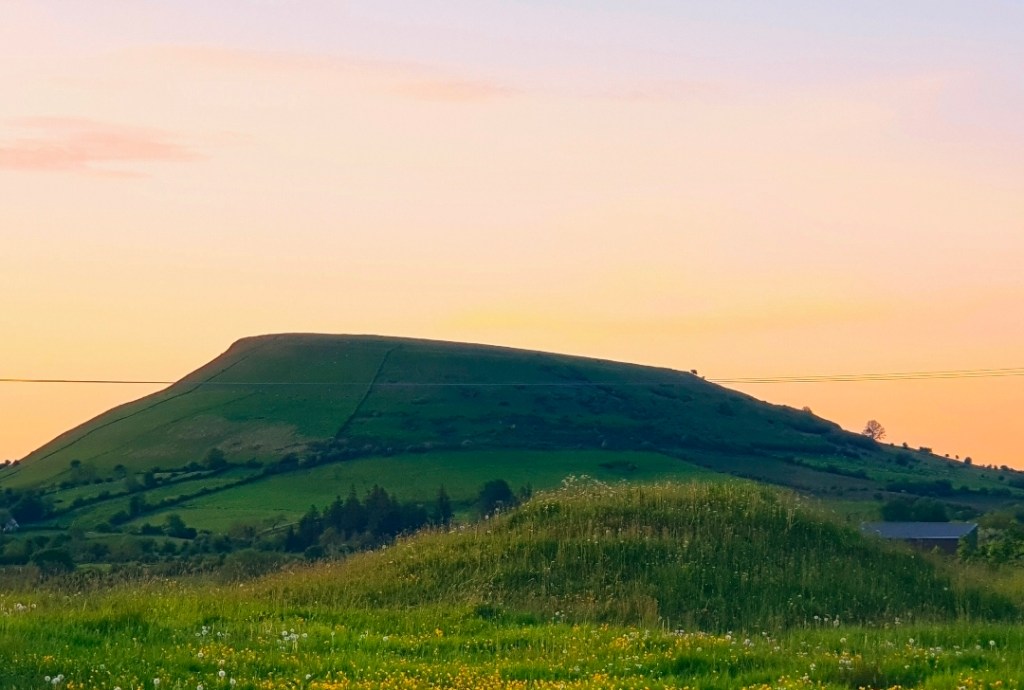
Figure 1. The prominent barrow at Carniara, situated within a wider ceremonial landscape centred on Knocknashee.
The most prominent of these monuments is the barrow recorded as SL032-071. Positioned on the crest of the ridge, it commands extensive views across the surrounding landscape. The monument consists of a circular earthen mound approximately 11 metres in diameter and rising to around 1.8 metres in height, with a distinctive flat-topped profile. Along part of its western side, traces of a surrounding ditch remain visible. The importance of the site was recognised in the nineteenth century, when it was marked as a triangulation point on the 1838 Ordnance Survey map.[2]
From this elevated position the barrow overlooks a landscape rich in archaeology and tradition. To the north rises Knocknashee, crowned by its great cairn and long associated with prehistoric activity and mythology. To the east lies Keshcorran, known for its caves and evidence of early settlement. On exceptionally clear days the view extends south-westward as far as Croagh Patrick and the distant Partry Mountains. Local tradition holds that when these mountains are clearly visible, a change in the weather is approaching.
The placement of the monument was almost certainly deliberate. Throughout Ireland, prehistoric burial monuments were frequently positioned on ridges, hilltops, and elevated ground where they remained visible within the wider landscape. The Carniara barrow appears to belong to this wider tradition and likely dates to the late Neolithic or Early Bronze Age, perhaps around 2500–2000 BC. Although excavation has never taken place, its form and siting closely resemble numerous prehistoric barrows recorded throughout the wider Achonry–Mullinabreena landscape. More than twenty barrow monuments, including ring-barrows, ditch-barrows, and burial mounds, survive within the parish and surrounding townlands, many occupying similar ridge-top and hillside positions. [3]
The monument forms part of a wider concentration of barrows extending along the same ridge. Nearby is another mound barrow, recorded as SL032-224, a smaller monument with a slight central depression and a long-standing local tradition of burials. Other barrows formerly existed within the same group, including a ring-barrow (SL032-072) and another mound barrow (SL032-220), both recorded in the Archaeological Inventory of County Sligo before being levelled during the twentieth century.[4] Together, these monuments indicate the survival of what was once an important ceremonial and funerary landscape.
In later centuries, the significance of this ridge may have been reinterpreted within the Gaelic political landscape of the O’Hara family, the ruling dynasty of Leyney. It has been suggested that the prominence and setting of the principal mound may have given it a role as a place of assembly or inauguration, where the authority of the O’Hara chiefs could be symbolically connected to an already ancient and meaningful landscape.[5] The survival of the name Carn Uí Eára, meaning “the cairn of the O’Haras”, suggests that this association became deeply embedded within the identity of the place itself.
Today, the barrow at Carniara can appear modest at first glance, yet its commanding position on the ridge and its relationship with the surrounding monuments hint at a landscape that once held far greater significance. The surviving earthworks preserve evidence of prehistoric burial practices, later Gaelic tradition, and the enduring importance of the wider landscape within the history of south Sligo.
References
- Logainm.ie – Carn Uí Eára / Carnyara
- Archaeological Survey of Ireland, Record SL032-071—-
- Kieran O’Conor, The Archaeology of Carniara Townland
- Archaeological Inventory of County Sligo (2005)
- The Corran Herald, Issue 51 (2018/2019); Sligo Field Club Journal (2021)

 Mullinabreena
Leave a comment